
What Does a Family Nurse Practitioner Do? Everything You Need to Know
A convergence of factors is driving significant demand for advanced practice nurses, particularly nurse practitioners (NP), across the country.
- The Health Resources and Services Administration (HRSA) reports that there are 7,837 health professional shortage areas (HPSAs) in the U.S. with a total population of 80 million people. These areas need 13,766 practitioners to address shortages.
- The population of older adults has grown rapidly over the last several years, and by 2030, around 21% of adults will be 65 and older, according to the U.S. Census Bureau. This will place a greater strain on the health care system, as older adults generally need more medical care.
- More than a third of the nation’s nursing workforce is 55 and older, according to the Health Resources and Services Administration. With millions of nurses approaching retirement age, there will be an increased need for qualified nursing professionals.
Nurse practitioners are the primary care providers for millions of Americans, conducting roughly 1 billion patient visits each year and playing an essential role in providing accessible, high-quality health care across diverse communities.
Earning a graduate degree in nursing is essential for aspiring FNPs. However, before taking that step, BSN prepared registered nurses (RNs) should understand what a family nurse practitioner does to help them decide if it is a career path that appeals to them.
Family Nurse Practitioner Career Overview
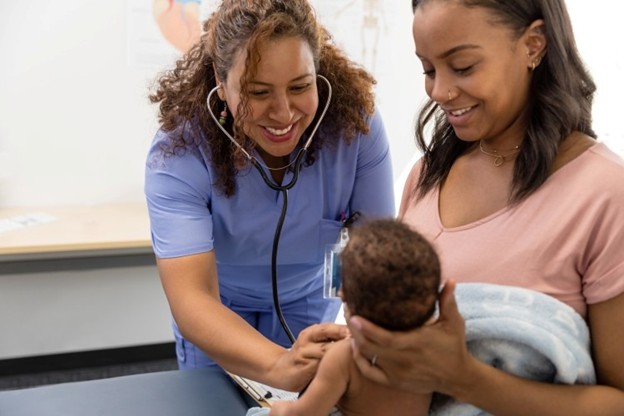
Family nurse practitioners provide primary and preventive care to patients of all ages, from infants to older adults. Many of them operate in a capacity similar to that of a primary care doctor. They treat acute illnesses and injuries, carry out routine medical services, and help patients manage chronic conditions.
FNPs have a fairly broad scope of practice, encompassing many duties that may include the following:
- Performing physical exams
- Ordering and interpreting diagnostic tests
- Developing treatment plans and updating existing ones as needed
- Prescribing medication
- Documenting patients’ health conditions and medical histories
- Promoting health and wellness by educating patients, their families, and the wider community
Where Do FNPs Work?
Because family nurse practitioners play such an integral part in the health care system, they can be found in virtually every kind of setting, ensuring quality care wherever it’s needed.
Some examples of settings where FNPs work include the following:
- Physician’s offices
- Hospitals
- Urgent care centers
- Community health clinics
FNPs can also be found in nonclinical settings, such as schools and public health facilities.
A family nurse practitioner’s job description and day-to-day responsibilities greatly depend on where they work.
FNP Scope of Practice
Another critical factor that affects an FNP’s duties is the state where they’re licensed to practice. Nurse practitioners’ responsibilities and scope of practice vary across state lines due to differing regulatory frameworks.
The American Association of Nurse Practitioners (AANP) outlines three types of nurse practitioner scope of practice:
- Full Practice: NPs can independently evaluate, diagnose, treat, and prescribe medications.
- Reduced Practice: State laws limit elements of NP practice, requiring regulated collaborative agreements with another health care provider (typically a physician) or restricting certain care settings.
- Restricted Practice: NPs are subject to ongoing supervision, delegation, or management from another health care provider in order to deliver patient care.
For example, New Jersey is a reduced practice state, which means NPs there can deliver most forms of patient care autonomously and are recognized as primary care providers. However, they need to have what’s known as a joint protocol collaborative agreement with a physician to prescribe medication.
How an MSN Degree Prepares FNPs
An MSN program builds on the foundational nursing education that RNs receive in their undergraduate BSN studies, helping them refine their clinical skills and advance their theoretical knowledge. Nurses in an MSN FNP program deepen their expertise in areas such as patient assessment, diagnosis, and treatment while learning evidence-based practices for primary care.
MSN program curriculum delves into other advanced topics, including important nonclinical aspects of nursing, to prepare students as well-rounded professionals. Some of the concepts covered in an MSN program may include the following:
- Nursing research
- Health policy
- Cultural competence
- Pathophysiology
- Pharmacology
Clinicals are an essential aspect of an MSN education, giving students the opportunity to apply what they’ve learned in the classroom and lab in real-world settings. These experiences help them further hone practical clinical skills as well as interpersonal competencies like communication and teamwork.
Through hands-on training and classroom instruction, students can gain a deeper understanding of what a family nurse practitioner does and how they provide comprehensive care to patients.
Other Benefits of Earning an MSN
Equipping RNs with the skills to become family nurse practitioners is just one of several potential advantages of earning an MSN. Additional benefits include the following:
- Improved employment prospects: The job market for nurse practitioners is incredibly robust. The U.S. Bureau of Labor Statistics (BLS) ranks it as the third fastest-growing occupation in the country, with employment projected to grow by 46% between 2023 and 2033, creating about 135,500 new jobs.
- Access to leadership positions: The skills and knowledge nurses gain in an MSN program can make them more viable candidates for advanced clinical and leadership roles, which may enable them to have a larger impact on patient outcomes and the health care system overall.
- Boosted salary potential: Advanced clinical and leadership roles typically come with higher pay. The median annual wage for a nurse practitioner in 2023 was $126,260 — around $40,000 more than registered nurses, according to the BLS.
Gain the Skills to Enter an In-Demand Profession
Family nurse practitioners are vital to the health care system, providing comprehensive care to diverse patient populations. As health care demands rise, fueled by an aging population and provider shortages, the expertise of FNPs is increasingly recognized as essential.
If you’re looking to take your nursing career to the next level, explore Felician University’s Online Master of Science in Nursing - Family Nurse Practitioner (MSN-FNP) program. Accredited by the Commission on Collegiate Nursing Education, the MSN-FNP program emphasizes evidence-based care and practical skill-building to help you become a more effective clinician. With our flexible scheduling, including two starts per year, you can earn your degree in two years.
Discover your path to an advanced nursing career at Felician University.
Sources:
- American Association of Nurse Practitioners, Nurse Practitioners in Primary Care
- American Association of Nurse Practitioners, State Practice Environment
- Association of American Medical Colleges, “New AAMC Report Shows Continuing Projected Physician Shortage”
- Health Resources and Services Administration, NCHWA Nursing Workforce Dashboard
- Health Resources and Services Administration, Shortage Areas
- Indeed, “20 Benefits of Earning a Master’scs Degree in Nursing”
- Indeed, “A Guide to MSN Nursing Programs”
- Johnson & Johnson, Family Nurse Practitioner (FNP) Career Guide
- U.S. Bureau of Labor Statistics, Fastest Growing Occupations
- U.S. Bureau of Labor Statistics, Nurse Anesthetists, Nurse Midwives, and Nurse Practitioners
- U.S. Bureau of Labor Statistics, Registered Nurses
- U.S. Census Bureau, “Demographic Turning Points for the United States: Population Projections for 2020 to 2060”